You may have heard about the somewhat controversial No Child Left Behind Act (NCLB) and the need for revisions and improvements. Now, a new law called the Every Student Succeeds Act (ESSA) has taken its place. So, what is this new law and how might it affect your children?
What Is the Every Student Succeeds Act?
The Every Student Succeeds Act, passed in December 2015, helps administer the country’s K–12 public education policy and monitors student testing and accountability. This new law is a little more flexible than the No Child Left Behind Act, and it’s been put in place to help under-performing schools and struggling students achieve greater results regardless of their income, intellectual ability, zip code, or background. Overall, it’s meant to help children become more successful students.
How Will It Affect Students and Parents?
You may not notice any immediate changes for your student, but public schools will be affected.
Because schools can now evaluate the consequences of poor grades themselves, teachers and schools are under less pressure to perform well at specific times of the year and, moving forward, it’s possible that standardized testing may become less frequent.
Now that decisions about student accountability are in the states’ and local school districts’ hands, parents can be more involved in discussions that surround the matters of their children including those with attention and learning issues.
There will also be more efforts to increase teacher involvement with students that have learning disabilities. More training and resources for teachers and parents will now be available to help reduce the challenges these children face in school.
The Every Student Succeeds Act also requires school districts and states to be more open with the parents of students with learning issues. Schools must meet achievement targets and note any performance issues, as well as make resources available to help improve students’ success rates.
How Does It Differ from Previous Laws?
The NCLB was in place to provide educational funding to the states in order to help all students get access to proper education more easily and reduce the fail and low-grade rate for poor and minority students.
ESSA takes principles from NCLB but offers a much more focused approach on each individual student’s needs. It means that your child will now be receiving individualized help. NCLB offered more of a one-size-fits-all approach, so it left out the specific needs and requirements for different school settings and students. The Every Student Succeeds Act is intended to close the achievement gap and produce better results for schools and students.
The new act requires the same state tests for the same grades, but there is more flexibility on when and how your child can take those tests. This might make it a little less stressful on you and your child because he or she will not be forced to take tests quite as frequently.
The previous law required federal funding to provide remedies for schools that did not show improvements in their grades. These remedies included firing staff, changing schooling schedules or even closing the school altogether. With ESSA, these rules are a little broader when it comes to intervention tactics.
The Goal to Improve K–12 Education
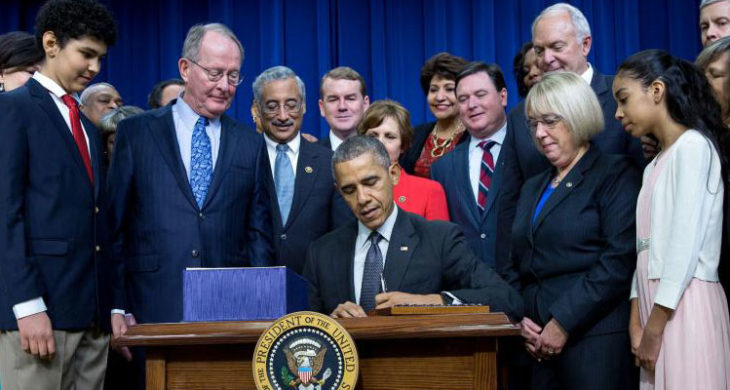
“We’ve got to learn what works and do more of that, and we’ve got to get rid of the stuff that doesn’t work,” President Obama said when he signed the bill into law. “And that’s exactly what the Every Student Succeeds Act does.”
Many parents have found online schooling to be a helpful public-school option. Learn how online schools work, and request more information if you think your child might benefit.
,